
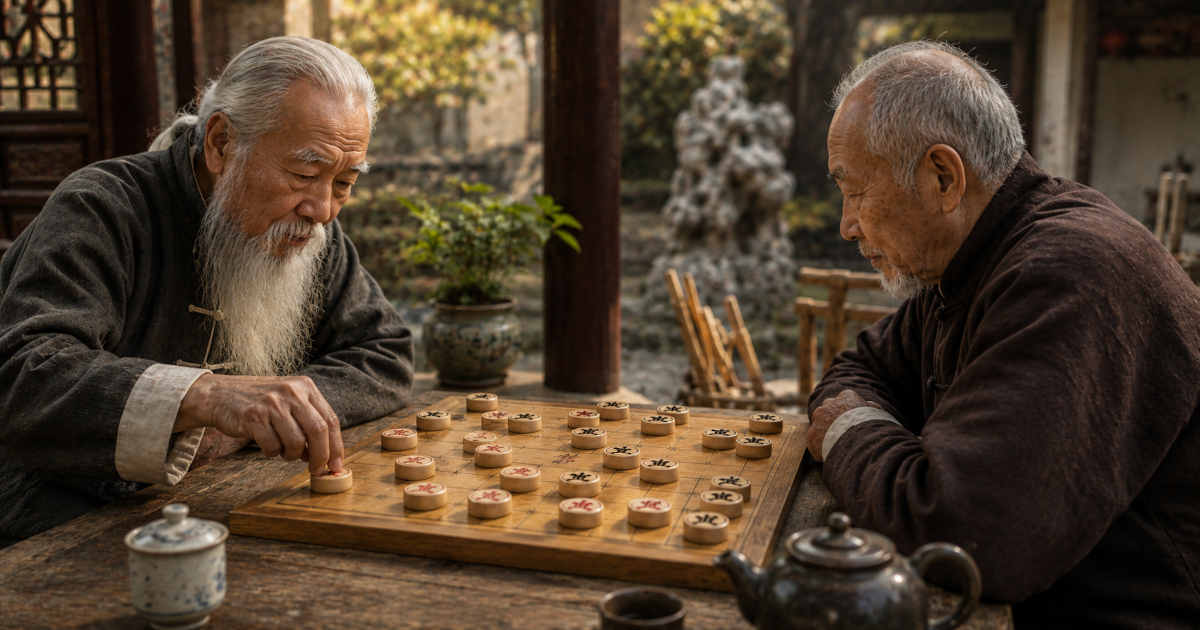
Xiangqi Tactics: 15 Essential Tactics to Improve Your Game
Xiangqi tactics are specific moves or combinations designed to gain an advantage over your opponent within a short sequence of moves. If strategy is about deciding where you want to go, tactics are about figuring out exactly how to get there.
In Xiangqi, a player may have a very promising position but still lose because of one overlooked tactical opportunity. A sudden check, a tactical capture, a pin, a well-timed exchange, or a piece sacrifice can completely change the course of a game.
For beginners especially, learning Xiangqi tactics can often produce faster improvement than simply memorizing opening variations. When you understand how to recognize tactical opportunities, you begin to understand why a move is strong instead of simply remembering that a certain move is recommended.
Why Should You Learn Xiangqi Tactics?
There is a simple truth about Xiangqi: relying entirely on intuition makes it very easy for your opponent to take control of the game.
Learning tactics helps you:
- Recognize attacking opportunities more quickly.
- Avoid blunders and unnecessary piece losses.
- Know when to attack and when to defend.
- Calculate variations in a more systematic way.
- Improve your board vision.
- Take advantage of your opponent's mistakes.
A strong Xiangqi player does not necessarily find the most beautiful move in every position. More often, they are simply better at not missing the critical moves.
1. Checks: Simple but Extremely Powerful
Checking the opponent's King is one of the most important tactical ideas in Xiangqi. When the General is in check, the opponent must respond immediately.
Checks can come from the Chariot, Cannon, Horse, or coordinated attacks involving several pieces.
For example, a Chariot check may look simple, but it can force the opposing General onto an unfavorable square. You may then follow up with a Cannon or Horse attack.
When considering a checking move, do not ask only:
“Can I check the King?”
Also ask:
“Where can the enemy General move, and what can I do after that?”
That is the foundation of tactical thinking.
2. Capturing Valuable Pieces
Another fundamental Xiangqi tactic is capturing an enemy piece without giving up something equally valuable in return.
However, you should never capture a piece simply because it is available.
Before making a capture, ask:
- Is the piece protected?
- Will my piece be recaptured?
- Is the captured piece worth more than what I may lose?
- Does the capture damage my position?
For example, winning a Pawn while allowing your Chariot to become trapped may not be worthwhile.
In Xiangqi, material matters, but piece activity and position matter too.
3. The Double Attack
A double attack occurs when one move creates threats against two targets at the same time.
For example, a Horse move may check the General while also attacking a valuable piece. A Cannon may threaten the General while simultaneously targeting a Chariot.
This is why you should regularly ask yourself:
“Can one move create two threats at once?”
When the answer is yes, your opponent may have very few good responses.
4. The Pin
A pin occurs when an enemy piece cannot move freely because doing so would expose a more important piece behind it.
In Xiangqi, pins can appear around the Palace or along files and ranks controlled by Chariots and Cannons.
A pinned piece can become practically useless, especially when the opponent has limited defensive resources. Once a key defender is immobilized, the rest of the defensive structure may collapse quickly.
5. The Skewer
A skewer is a tactical pattern in which a more valuable piece is attacked first, forcing it to move and exposing a less valuable piece behind it.
For example, a checking move may force the General to move, allowing you to capture an important piece positioned behind it.
This type of tactic requires you to see beyond the immediate move and understand what happens after the forced response.
6. Restricting the Enemy General
In Xiangqi, the General has very limited mobility because it is confined to the Palace. As a result, controlling the squares around the General can be extremely powerful.
Chariots, Cannons, and Horses can work together to limit escape squares. Once the opposing General has only one or two legal options, the final attack becomes much easier to execute.
A useful principle to remember is:
Do not only attack the General. Control the squares where the General can escape.
That is the difference between giving a random check and giving a check that is part of a winning combination.
7. Coordinating Chariots, Cannons, and Horses
One of the foundations of Xiangqi tactics is piece coordination.
The Chariot is extremely powerful on open ranks and files. The Cannon is excellent for long-range attacks when a screen is available. The Horse can create unusual threats around the center and the enemy Palace.
When these pieces work together, their combined power is much greater than when they operate independently.
For example:
- The Chariot controls an important file or rank.
- The Cannon puts pressure on the Palace.
- The Horse restricts the General's escape routes.
Once the opponent's mobility has been reduced, a decisive tactical attack can appear very quickly.
8. Sacrificing Pieces for an Attack
Many beginners assume that losing a piece automatically means making a bad move. In Xiangqi, however, a piece sacrifice can be a powerful tactical weapon.
You may sacrifice a piece to:
- Open a file for a Chariot.
- Break through the defensive formation.
- Bring a Cannon into an attacking position.
- Launch a series of checks.
- Win a more valuable piece.
- Create a mating net around the General.
A sacrifice is only good when you understand what you are gaining in return.
A real tactical sacrifice is not reckless gambling. It is an investment made for a concrete purpose.
9. Exchanging Pieces at the Right Time
Piece exchanges are extremely important in the middlegame and endgame.
If you have a material advantage, exchanging pieces can reduce your opponent's attacking resources and make the position easier to control. If you are behind, exchanging pieces without gaining a specific benefit may make your situation worse.
A useful general principle is:
When you are ahead, simplify. When you are behind, look for complications.
This is not an absolute rule, but it is a useful guideline for understanding why and when exchanges are valuable.
10. Xiangqi Opening Tactics
The opening is not just about developing pieces. It is also about creating the foundation for future tactical opportunities.
Some important opening principles include:
- Develop the Chariots early.
- Place Horses and Cannons on active squares.
- Contest the central area.
- Protect the General.
- Avoid moving the same piece repeatedly without a concrete reason.
- Prevent your own pieces from blocking one another.
Opening systems such as Screen Horse, Central Cannon, Matched Cannons, and Opposite Cannons each have their own tactical ideas.
However, understanding the principles behind an opening is more valuable than memorizing dozens of variations.
11. Attacking Weak Pieces and Weak Points
Every position has one or more weaknesses.
These may include:
- An undefended piece.
- A defensive line with insufficient protection.
- A Horse with limited mobility.
- A blocked Chariot.
- An exposed area around the General.
Instead of attacking everywhere, focus your forces on one clear weakness.
This approach allows you to attack efficiently without wasting valuable resources.
12. Defensive Tactics and Counterattacking
Defense does not mean sitting back and waiting to be attacked.
A strong player often defends by creating a counter-threat.
For example, if your opponent is preparing a major attack on one side of the board, you may create a checking threat on the opposite side. Your opponent may then be forced to stop attacking and deal with your threat instead.
This is the essence of a counterattack.
In many games, the player who launches the first attack may actually become the one who makes the first mistake because they become too focused on attacking. Never assume that the attacking side automatically has the advantage.
13. Look for Forcing Moves
When it is your turn, an effective way to think is to examine moves in this order:
Checks → Captures → Threats
This method helps reduce the number of candidate moves you need to calculate.
Instead of considering twenty moves equally, start with moves that force your opponent to respond.
This approach is particularly useful in online Xiangqi games where you are playing under a time limit.
14. Calculate Before You Move
One of the most common mistakes among Xiangqi players is seeing an attractive move and playing it immediately.
Build the habit of calculating at least three steps:
What do I play → What will my opponent play → How will I respond?
As your skills improve, you can calculate four, five, or more moves when the position requires it.
The goal is not always to calculate extremely deeply. The goal is to calculate the critical variations accurately.
15. Practice Xiangqi Tactics with Puzzle Positions
One of the most effective ways to improve is by solving tactical puzzles.
You can spend 15–30 minutes each day practicing:
- Checkmate puzzles.
- Tactical captures.
- Piece sacrifices.
- Chariot–Cannon–Horse combinations.
- Endgame tactics.
- Tactical positions from real games.
When solving a puzzle, do not immediately look at the answer.
Ask yourself:
“If this were a real game, what move would I play?”
Then compare your answer with the solution and understand why your move worked or failed.
This training method helps you develop recognition of recurring tactical patterns rather than simply memorizing individual positions.
Common Mistakes When Using Xiangqi Tactics
Some players study tactics but still improve slowly because they make several common mistakes.
Attacking All the Time
Not every position requires an attack. Sometimes defending, exchanging pieces, or improving your position is the strongest choice.
Checking Just Because You Can
A check is not automatically a good move. If the check allows you to lose material or destroys your own position, it may actually be a mistake.
Ignoring the Opponent's Best Response
This is one of the most common errors.
Before making a move, ask:
“What is my opponent's strongest response?”
Do not calculate only the move you hope your opponent will play.
Focusing Too Much on Winning Material
Winning a piece does not always mean winning the position. A Pawn may be less valuable than a powerful attacking position or a dangerous initiative.
How to Practice Xiangqi Tactics Effectively
You can build a simple training routine:
Step 1: Learn basic tactical patterns such as checks, captures, double attacks, pins, skewers, and sacrifices.
Step 2: Solve tactical puzzles every day.
Step 3: Play practical games and deliberately apply the tactics you have learned.
Step 4: Review your games after playing.
Step 5: Record the moments when you missed tactical opportunities.
After some time, you will begin to recognize familiar tactical patterns almost automatically. This is when your practical playing strength can improve significantly.
Conclusion
Xiangqi tactics are one of the most important factors determining a player's strength. You may know many opening systems, understand how every piece moves, and study famous positions, but without tactical awareness, it is difficult to win consistently.
Start with the fundamentals: checks, captures, double attacks, pins, skewers, sacrifices, exchanges, and piece coordination. Then move on to tactical puzzles and practical game analysis.
Xiangqi is not simply a game of moving pieces. It is a game of observation, calculation, and prediction.
And sometimes, one perfectly timed move is all it takes to make the entire board… disappear. ♟️
Related Articles: How to Play Xiangqi for Beginners, Xiangqi Rules & Terminology, What Is Screen Horse?, Xiangqi Endgame Strategy.
