
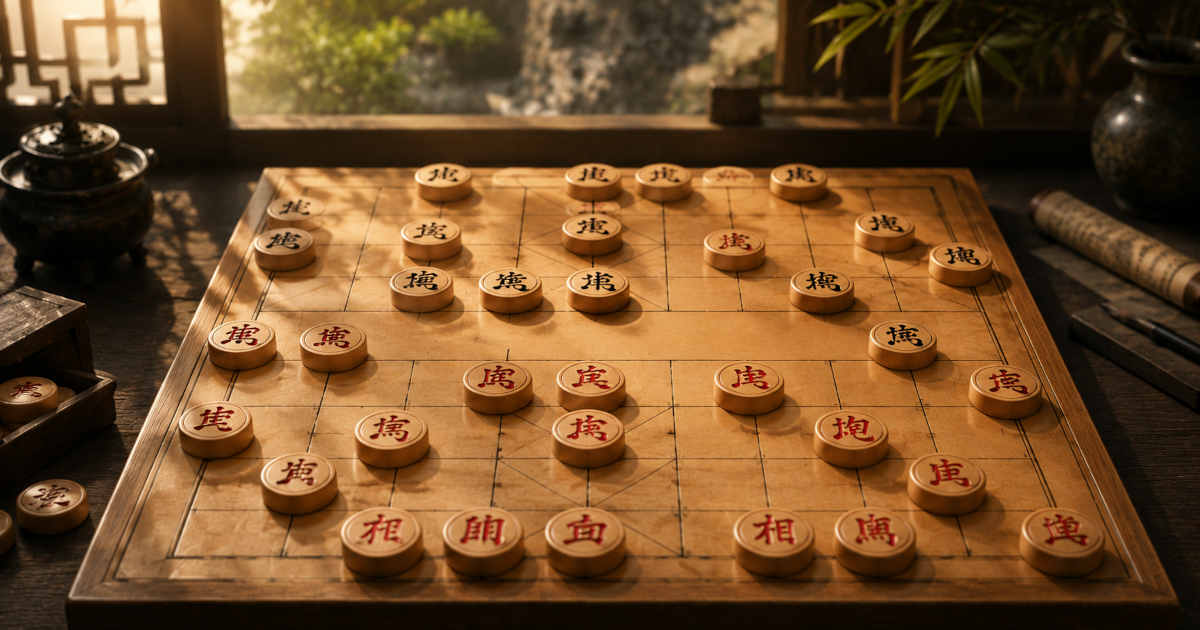
Here is the English translation of the SEO-optimized blog post about the Xiangqi middlegame:
The following SEO-optimized article provides a comprehensive and profound look into the art of maneuvering pieces during the middlegame in Xiangqi (Chinese Chess).
The Importance of the Middlegame in Xiangqi
Xiangqi is not just an intellectual board game; it is a miniature military art where human strategy is pushed to its absolute limits. In a standard match, we go through three distinct phases: the opening (deploying forces), the middlegame (engagement), and the endgame (finishing). If the opening is the foundation for your formation, and the endgame is the decisive fatal blow, then the middlegame in Xiangqi is the soul and heart of the entire match. This is the fiercest, most unpredictable phase, and where the true caliber of the players is most clearly defined.
The middlegame officially begins when major pieces like the Chariot (Rook), Cannon, and Horse (Knight) have been mobilized, occupying strategic positions, and the two sides engage in direct clashes. Its importance is undeniable, as this is the moment that determines the vast majority of your advantages. Unlike the opening, where you can memorize standard variations, the middlegame requires infinite creativity, deep calculation, and the ability to flexibly adapt to every move the opponent makes.
The greatest characteristic of the middlegame is its complexity. Tens of thousands of possibilities can arise after just a single move. A skillful maneuver can swing the door wide open to victory, but a miscalculation can also lead you into a "suicidal" position. During this phase, the power of the pieces is maximized through traps, counterattacks, and the fierce battle for every inch of the board. In reality, many top-tier matches conclude right here with beautiful mating nets without ever reaching the endgame. Therefore, understanding how to play the middlegame is the only path to elevating yourself to the level of a master.
Core Principles for Mastering the Middlegame
Amidst the tens of thousands of complex variations in a match, players can easily lose their sense of direction and make disjointed, ineffective moves. To maintain a coherent formation and continuously apply pressure on the opponent, you need to stick to the following core principles:
- Ensure absolute safety for the General: Any flashy attacking campaign becomes meaningless if your "home" is set ablaze by the enemy. Always maintain a solid defensive system of Advisors and Elephants, and constantly ask yourself: "If the opponent counterattacks right now, is my General safe?"
- Always strive for the initiative: In military strategy, there is a saying, "He who strikes first gains the upper hand." Proactively creating threats to force your opponent into a defensive posture will help you control the tempo of the game. When the enemy has to constantly retreat to save their pieces, they will quickly become exhausted and reveal fatal mistakes.
- Flexibly coordinate different piece types: A common mistake among beginners is relying solely on the power of a single Chariot. In the Xiangqi middlegame, true strength comes from cohesion. The Chariot clears the path, the Cannon acts as the explosive fuse, and the Horse weaves through to break the lines. This multi-dimensional coordination will tear apart any solid defensive line.
- Occupy strategic "choke points": Space on the board is a matter of life and death. Controlling the center file (File 5), the rib files (Files 4 and 6), or crucial outposts in the opponent's territory will allow your pieces to maximize their operational range while suffocating the enemy's living space.
When applying these principles, remember that a Xiangqi position is always in a dynamic state. A priority principle in one move might have to give way to another strategy in the very next move. Sensitivity and flexibility in your thinking are the universal keys.
Top-Tier Tactics Commonly Encountered
The intense appeal of the Xiangqi middlegame comes from spectacular and surprising tactical strikes. If principles are the compass, tactics are the sharp swords that help you finish off your opponent:
- The art of sacrificing material for positional advantage: This is the quintessence of an attacking style, requiring immense courage and exceptional calculation skills. You proactively sacrifice a valuable piece (usually a Horse or a Cannon) to rip through the opponent's defensive structure, thereby weaving an inescapable mating net.
- Divide and conquer (Isolation): Use heavy firepower to cut off communication between the opponent's defending groups. When an enemy piece is isolated, surrounded by your forces, and cannot receive support from its comrades, it becomes easy prey for you to devour.
- The Fork (Double Attack): Moving a piece to a position where it simultaneously threatens two or more important enemy targets at once. The opponent will fall into a dilemma, forced to "abandon one to save the other," which allows you to gain a significant material advantage.
- Borrowing force (Discovered Attack/Check): Utilizing the opponent's own pieces or your own as a springboard for the Cannon, or cleverly moving a shielding piece to clear the line for a Chariot or Cannon positioned behind to threaten the enemy General. This is a highly dangerous attack because the opponent often cannot react in time.
Mistakes to Avoid and Training Methods
Conquering the middlegame has never been easy, even for veteran players. Below are the fatal mistakes you need to eliminate immediately, along with practical training methods to improve your skills:
- Absolutely avoid being "penny wise, pound foolish" (Blind Pawn grabbing): Do not let a single enemy Pawn or a bait Horse destroy your entire safe formation. Blindly grabbing material is the shortest path to falling into an ambush and losing your overall advantage entirely.
- Solve tactical puzzles daily: Dedicate at least 30 minutes a day to solving mating puzzles or standard middlegame situations. This habit helps your brain memorize tactical motifs, enhances your reflexes, and sharpens your board vision.
- Deeply analyze your practical games: After every match (especially the lost ones), use analysis software (Xiangqi engines) to review every move in the middlegame. Confronting your own mistakes and taking notes will lead to leaps in your strategic thinking.
- Study the games of Grandmasters: Watching how Grandmasters like Wang Tianyi or Zheng Weitong play will help you absorb top-tier positional thinking. Try pausing the video before their crucial moves, think about what you would play, and then compare it with the actual decisions of these masters.
In summary, the middlegame in Xiangqi is a vast ocean of military art and psychological fortitude. Mastering the core principles, understanding the tactics, and continuously learning from actual combat will help you build a solid foundation of skills. Persevere in your training, and you will soon turn the middle phase of the game into your own stage to showcase your talent.
Among the middlegame tactics mentioned above, which skill do you feel you are struggling with the most, or would you like me to analyze the art of sacrificing material for positional advantage more deeply?
