
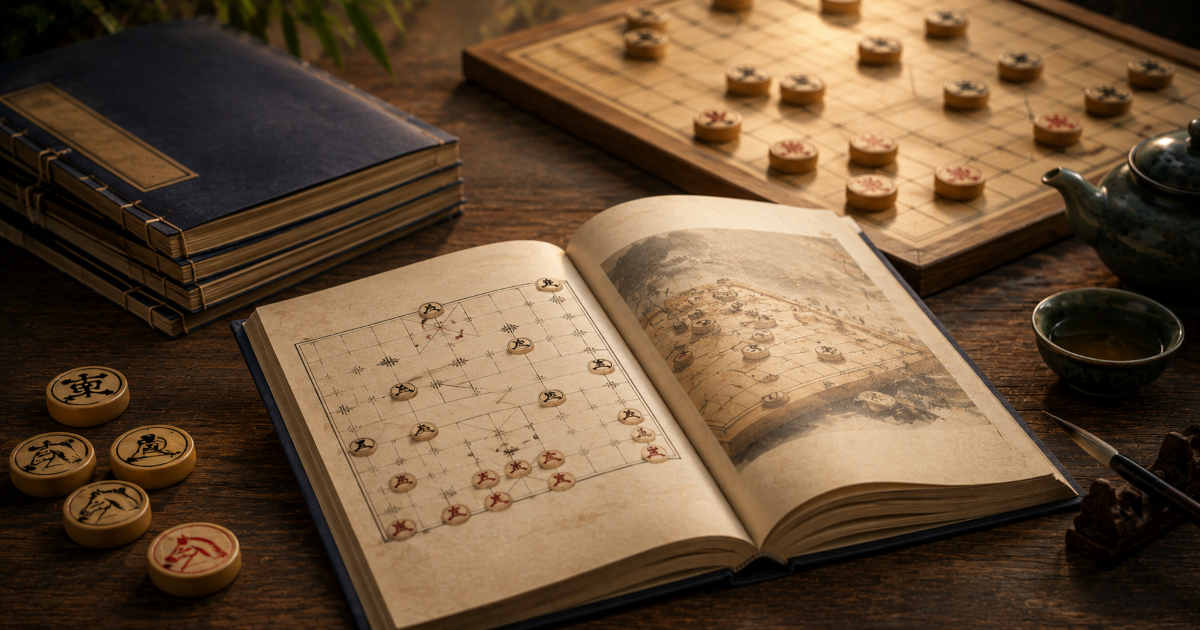
Xiangqi Playing Guide: How to Play Chinese Chess from Beginner to Advanced
Xiangqi, also known as Chinese Chess, is one of the most popular traditional strategy games in Vietnam and many other Asian countries. More than just a form of entertainment, Xiangqi helps players improve logical thinking, calculation skills, memory, concentration, and strategic planning. However, for beginners, the board and the movement of the different pieces can seem quite confusing at first.
This Xiangqi playing guide will help you understand the most important fundamentals, from the board layout and piece movements to the basic rules and strategies. With regular practice, you can go from knowing almost nothing about Xiangqi to confidently playing complete games and developing your own playing style.
1. What Is Xiangqi?
Xiangqi, commonly known as Chinese Chess, is a two-player strategy board game. Each player controls an army of pieces, with the ultimate goal of checkmating the opponent's General.
A Xiangqi game usually begins with a relatively balanced position. However, one small mistake in developing your pieces, protecting your General, or calculating variations can completely change the position.
One of the most distinctive features of Xiangqi is its board. Unlike Western Chess, which is played on 64 squares, Xiangqi is played on the intersections of the lines. The board has 9 vertical lines and 10 horizontal lines, creating 90 possible positions for the pieces.
A river runs across the middle of the board, dividing it into two sides. This river affects the movement and strategic roles of several pieces.
2. What Does a Xiangqi Board Contain?
Before learning how to move the pieces, you need to understand the basic structure of the Xiangqi board.
Each player starts with 16 pieces:
- 1 General
- 2 Advisors
- 2 Elephants
- 2 Chariots
- 2 Horses
- 2 Cannons
- 5 Soldiers
There are 32 pieces in total on the board at the beginning of a game.
One of the most important areas is the Palace, where the General and Advisors operate. The General must remain inside this restricted area, making palace control a critical part of both attack and defense.
The river lies between the two sides of the board. Soldiers gain additional movement options after crossing the river, while Elephants are not allowed to cross it.
3. How to Move the Xiangqi Pieces
This is the most important section of any Xiangqi playing guide. Before thinking about advanced strategies, you need to understand exactly how each piece moves.
The General
The General moves one point horizontally or vertically at a time and must remain inside the Palace.
The General is not allowed to leave the Palace. In addition, the two Generals may not face each other directly along the same open file without another piece between them.
This is one of the unique rules of Xiangqi and is something beginners often forget.
The Advisor
The Advisor moves one point diagonally and must remain inside the Palace.
Its primary role is defense. Although Advisors are not particularly strong attacking pieces, they are extremely important for protecting the General.
The Elephant
The Elephant moves exactly two points diagonally.
However, an Elephant cannot cross the river. In addition, if another piece occupies the midpoint of its diagonal path, the Elephant cannot move in that direction. This blocked midpoint is commonly referred to as the Elephant's eye.
The Chariot
The Chariot is one of the strongest pieces in Xiangqi.
It can move any number of points horizontally or vertically, as long as no other piece blocks its path.
Because of its mobility, the Chariot is extremely valuable for controlling open files, attacking the enemy General, and coordinating with other pieces.
The Horse
The Horse moves in an L-shaped pattern, somewhat similar to the Knight in Western Chess. However, there is an important difference: the Horse can be blocked at its leg.
If another piece occupies the point immediately next to the Horse in the direction of movement, the Horse cannot move in that direction.
This creates many tactical possibilities. Strong players often use this rule to restrict the opponent's Horses and reduce their mobility.
The Cannon
The Cannon moves horizontally or vertically like a Chariot when it is not capturing.
However, when capturing a piece, the Cannon must jump over exactly one intervening piece, known as the screen or platform.
For example, if one piece is positioned between the Cannon and an enemy piece, the Cannon can jump over it and capture the enemy piece. If there is no intervening piece, or if there are two or more pieces in between, the capture is not legal.
Cannons are particularly powerful in the opening and middlegame.
The Soldier
A Soldier initially moves one point forward.
After crossing the river, a Soldier gains the additional ability to move one point horizontally to the left or right. However, it can never move backward.
Do not underestimate Soldiers. A passed Soldier that has crossed the river can create significant pressure and may even become a decisive factor in the endgame.
4. What Is the Goal of a Xiangqi Game?
The main objective is to checkmate the opponent's General.
A check occurs when the General is under direct attack and the player must respond by getting the General out of danger.
There are several ways to respond to a check, including:
- Moving the General to a safe position.
- Blocking the attacking line with another piece.
- Capturing the attacking piece.
If the player cannot escape the check, the position is checkmate and the game ends.
Therefore, Xiangqi is not simply about capturing as many pieces as possible. You can have a significant material advantage and still lose if your General is checkmated.
5. How Should Beginners Start Learning Xiangqi?
One of the most common mistakes beginners make is trying to memorize complicated positions and opening variations immediately. A better approach is to learn progressively.
First, memorize the movement rules of all seven types of pieces.
Next, practice recognizing situations such as checks, captures, pins, blocks, and defended pieces.
Once you are comfortable with these fundamentals, start learning about Xiangqi openings.
Some basic opening principles include:
Develop Your Pieces
Do not move the same piece repeatedly without a clear reason. Develop your Chariots, Horses, and Cannons so that they can actively participate in the game.
Protect Your General
Do not neglect your Palace. A beautiful attacking position is meaningless if your General is left vulnerable.
Control the Center
The central area of the board is extremely important for creating pressure and coordinating your pieces. Many famous Xiangqi openings focus heavily on controlling the central files.
Do Not Capture Automatically
Just because an enemy piece appears to be free does not mean you should capture it immediately. Before every capture, ask yourself whether your own piece will become vulnerable to a counterattack or tactical trap.
6. Common Xiangqi Opening Systems
Once you understand the basic rules, you can begin exploring different opening systems.
One of the most famous is Screen Horse, commonly known by the Chinese term Bingfeng Ma or Bình Phong Mã. This opening system emphasizes developing the Horses into a solid defensive formation while preparing to resist direct attacks against the center.
Other well-known systems include Central Cannon, Same-direction Cannon, Opposite-direction Cannon, Flying Elephant, and many other opening structures.
Beginners do not need to memorize dozens of variations immediately. What matters more is understanding the ideas behind the moves.
For example, when developing a Horse, you should understand which squares it controls, what it protects, and which other pieces it is expected to coordinate with.
7. Basic Xiangqi Tactics
After learning the rules, you should begin practicing tactical patterns.
Some important tactical concepts include:
Check: Creating a direct threat against the enemy General.
Capture: Finding opportunities to win material or remove an important enemy piece.
Pin: Restricting an enemy piece because moving it would expose a more valuable piece behind it.
Fork: Using one move to create two or more threats at the same time.
Sacrifice: Giving up a piece intentionally in order to gain a stronger strategic or tactical advantage.
Blockade: Restricting the movement of an important enemy piece such as a Horse, Chariot, or Cannon.
These tactical ideas appear frequently in real Xiangqi games.
8. Why Calculation Is So Important
A strong Xiangqi player does not think only about the move they want to make. They also consider how the opponent is likely to respond.
You can start with a simple calculation method:
My move → opponent's possible reply → my next move.
Once you become comfortable with this process, gradually extend your calculation to three, five, or even more moves ahead.
Before making a move, check three things:
- What is my opponent threatening?
- Will my move leave one of my pieces undefended?
- Does my move allow the opponent to give a strong check or win material?
Developing this habit can significantly improve your playing strength.
9. How to Practice Xiangqi Effectively
Regular practice is the key to improvement. You can play against friends, online opponents, or computer engines.
However, do not spend all your time playing complete games. You should also solve Xiangqi puzzles and tactical positions. These exercises train you to recognize combinations and calculate forcing moves more quickly.
Another very effective method is reviewing your games after they are finished. Do not focus only on whether you won or lost. Instead, try to identify:
- Which move caused the position to change significantly?
- Where did your first major mistake occur?
- Did you miss an opportunity to win material or deliver checkmate?
- Was your opening development efficient?
This post-game analysis is where much of your practical experience is converted into real improvement.
10. Common Mistakes Made by Beginners
Beginners often make several easily recognizable mistakes.
The first is focusing only on capturing pieces. Xiangqi is a game of position and coordination, not a competition to see who can capture more pieces.
The second is putting the General in danger. Many beginners concentrate so heavily on attacking that they forget about defense.
The third is moving the same piece too many times during the opening, while other pieces remain undeveloped.
The fourth is failing to consider the opponent's counterattack.
Finally, many beginners play too quickly. Even in online games, you should take a moment to check for checks, captures, tactical threats, and defensive resources before committing to a move.
11. How to Improve Your Xiangqi Skills
Once you become comfortable with the rules and basic tactics, you can move on to more advanced topics such as opening theory, middlegame strategy, endgame technique, and advanced tactical patterns.
In particular, Xiangqi endgames are extremely valuable to study. Many games are not decided by a spectacular attack but by a player's ability to convert a small advantage into a win.
You should also learn how to evaluate a position. When looking at a board, practice answering questions such as:
- Which side has the better material?
- Which pieces are more active?
- Which General is safer?
- Which side controls the center more effectively?
- Who has the initiative?
This is the stage where you move from simply “knowing how to play Xiangqi” to actually understanding the game.
12. Conclusion
Hopefully, this Xiangqi playing guide has given you a clear foundation for beginning your journey into Chinese Chess. Remember that Xiangqi is not a game you can truly master after only a few games. Your skills develop through understanding the rules, practicing tactics, studying openings, reviewing your games, and most importantly, playing regularly.
As a beginner, do not put too much pressure on yourself to win immediately. Focus on understanding why a move is strong, why another move is a mistake, and how your opponent can exploit those mistakes.
As you continue practicing, you will gradually start noticing tactical opportunities and strategic ideas that you would have completely missed before. That is when your Xiangqi strength is truly beginning to grow.
And who knows? After a few months of practice, the player who once defeated you may end up staring at the screen wondering what just happened after falling into your tactical trap.
That is the beauty of Xiangqi: every move tells a story.
