
Central Cannon in Xiangqi: Definition, How to Play, and Common Opening Systems
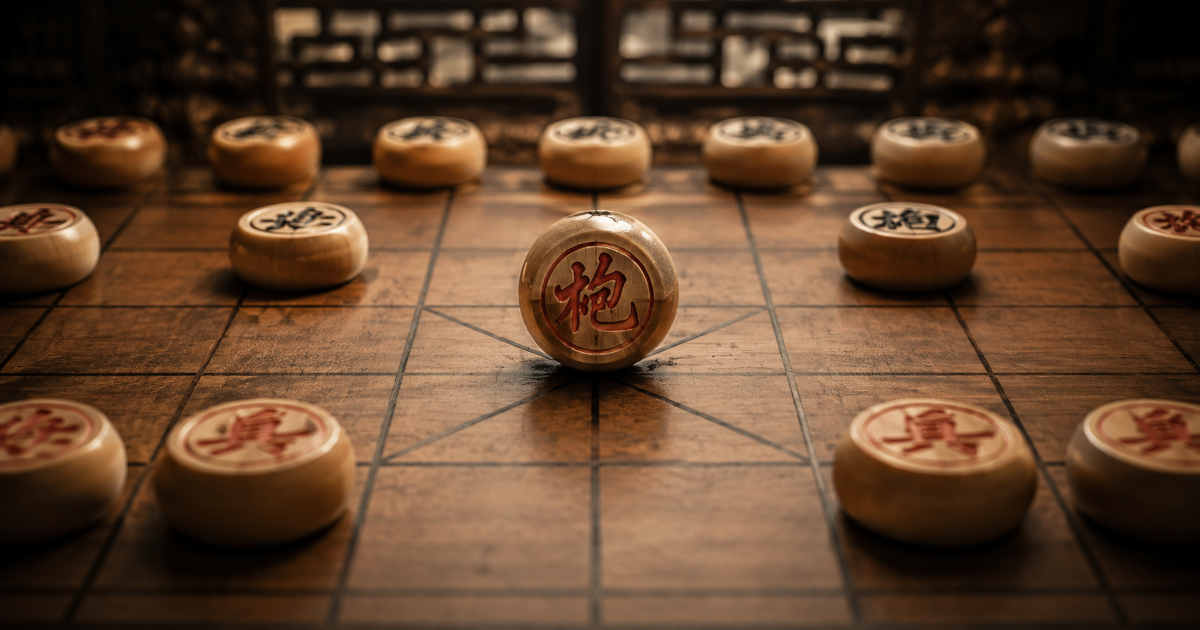
The Central Cannon in Xiangqi is one of the most classic and popular opening systems, widely used by everyone from beginners to professional players. The defining feature of this opening is that the player moves one of the Cannons to the central file with Cannon 2 to 5 (C2=5) or Cannon 8 to 5 (C8=5), immediately creating pressure in the center and opening up numerous attacking possibilities.
The Central Cannon is much more than a single opening move. It is a broad family of opening systems with many variations, including Central Cannon vs. Screen Horse Defense, Central Cannon vs. Palcorner Horse, Same-direction Cannon, Opposite-direction Cannon, and many other setups.
In this article, we will explore what the Central Cannon is, its key characteristics, how to play it effectively, common responses, and important strategic principles for using this opening.
What Is the Central Cannon in Xiangqi?
The Central Cannon is an opening formation in which one side moves a Cannon from the flank to the central file using:
- Cannon 2 to 5 (C2=5)
- Cannon 8 to 5 (C8=5)
Depending on its original position, the Cannon may come from either the left or right side of the board. Once it reaches the central file, the Cannon puts pressure on the opponent's central formation and prepares to coordinate with other major pieces.
The name Central Cannon comes from the Cannon being moved into the center of the board. It is one of the most direct opening systems in Xiangqi and reflects a clear strategic idea: take the initiative from the very beginning.
It is important to understand that the Central Cannon is not a single fixed variation. After C2=5 or C8=5, the defending side has many possible responses. As a result, games that begin with the Central Cannon can develop into completely different types of positions.
Why Is the Central Cannon So Popular?
One of the greatest strengths of the Central Cannon opening is its ability to create pressure quickly.
The central file is especially important in Xiangqi. The two Generals are positioned on the same file, and many decisive attacks are connected with control of the center. Moving a Cannon into the center gives the player an additional powerful piece with which to control this critical area.
The Central Cannon also provides opportunities for rapid coordination between the Rooks, Horses, Cannons, and Pawns. When the pieces are developed correctly, the attacking side can organize threats from multiple directions.
Another advantage is its flexibility. A player can shift from a direct central attack to a wing attack, or transition from active play to a defensive setup depending on the opponent's formation.
Key Strategic Characteristics of the Central Cannon
Controlling the Central File
The most obvious characteristic of the Central Cannon is its focus on the center. After the Cannon moves to the central file, it can put immediate pressure on the opponent's defensive setup.
However, the objective is not simply to launch an immediate attack. Control of the center also restricts the opponent's coordination and creates better opportunities for the rest of the army to develop.
Improving Piece Coordination
A strong Central Cannon position does not rely on the Cannon alone. The Cannon must work together with the Rooks, Horses, and Pawns.
After placing the Cannon in the center, the player normally continues developing the other pieces. Horses can support the center, Rooks can seek active files, and the Advisors and Elephants can strengthen the defensive structure around the General.
A good Central Cannon position is one in which multiple pieces participate in the attack, rather than relying on a single Cannon.
High Tactical Intensity
The Central Cannon often leads to games with a fast pace and many tactical possibilities. Both sides can quickly create attacking and counterattacking opportunities.
This is one reason why the opening is particularly attractive to players who enjoy active and tactical positions.
Common Defenses Against the Central Cannon
After one side plays C2=5 or C8=5, the opponent has many possible defensive systems. In practical play and opening theory, several responses are particularly well known.
Central Cannon vs. Screen Horse Defense
The Screen Horse Defense is one of the most famous ways to meet the Central Cannon.
The basic idea is to develop both Horses in a way that creates a solid defensive structure in the center. This setup helps reduce the pressure of the Central Cannon, protects the central area, and prepares counterattacking chances.
Central Cannon versus Screen Horse Defense contains a huge number of variations and has been studied extensively in modern Xiangqi theory. Players who want to improve their opening knowledge should spend considerable time studying this system.
The key is not simply memorizing the moves. Players should understand why the Horses are developed in those positions, when exchanges are favorable, and when the defender should begin a counterattack.
Central Cannon vs. Palcorner Horse
The Palcorner Horse Defense is another important system against the Central Cannon.
Instead of building the same defensive structure as the Screen Horse Defense, Palcorner Horse emphasizes flexibility and counterplay. The defending side seeks to create pressure of its own, preventing the Central Cannon player from carrying out an attack freely.
This system is particularly suitable for players who enjoy flexible positions and do not want to rely entirely on passive defense.
Central Cannon vs. Same-direction Cannon
Same-direction Cannon is a classic confrontation in which both sides use their Cannons to control the center within corresponding structures.
This opening often leads to highly dynamic positions. Both players must carefully coordinate their Rooks and Horses, decide when exchanges are favorable, and identify the correct direction of attack.
Same-direction Cannon contains many theoretical variations and remains an important subject in Xiangqi opening study.
Central Cannon vs. Opposite-direction Cannon
Opposite-direction Cannon is another highly tactical opening system. Both sides use Cannons in the center but arrange their forces differently, leading to direct attacking battles.
In many Opposite-direction Cannon variations, a single inaccurate move can result in material loss or even a rapid mating attack. Calculation and tactical awareness are therefore extremely important.
How to Play the Central Cannon Effectively
Knowing C2=5 or C8=5 is only the beginning. To use the Central Cannon effectively, a player must understand the principles of piece development.
Develop Your Pieces Quickly and Efficiently
After moving the Cannon to the center, do not repeatedly move it in search of an immediate attack. Instead, develop the rest of your army quickly.
The Horses should be developed to support the center. The Rooks should seek active positions. The Advisors and Elephants should be arranged appropriately to protect the General.
A strong Central Cannon position is one in which multiple pieces work together, rather than relying on one Cannon to do everything.
Create Pressure Instead of Attacking at All Costs
Having a Cannon on the central file does not mean that you must attack immediately.
In many positions, it is better to maintain pressure and wait for the opponent to create a weakness. Once that weakness appears, you can use your positional advantage to launch a tactical operation.
This is one of the key differences between a beginner and an experienced player.
Maintain a Balance Between Attack and Defense
A common mistake when playing the Central Cannon is focusing too heavily on attacking.
While concentrating pieces on one wing, a player may unintentionally weaken another part of the board or expose the General. The opponent can then exploit these weaknesses with a counterattack.
Therefore, besides asking “Where can I attack?”, a strong player should also ask “What counterattack does my opponent have?”
Common Mistakes When Playing the Central Cannon
Memorizing Openings Without Understanding Them
Memorizing opening variations can certainly help, but it does not guarantee success.
If the opponent makes a move outside the variation you studied, you may suddenly find yourself unsure how to continue.
Understanding the principles behind each move is much more valuable than memorizing a sequence mechanically.
Attacking One Target With Too Many Pieces
Concentrating many pieces on a single target is not always a good idea. If the opponent can exchange or capture one of your key attacking pieces, the entire plan may collapse.
Before launching a major attack, carefully assess the opponent's defensive resources and tactical counterplay.
Ignoring the Wings
The Central Cannon focuses heavily on the center, but that does not mean the entire game will be decided there.
The opponent's Rooks and Cannons can switch directions very quickly. A wing that appears safe can suddenly become the location of a decisive attack.
Neglecting the General's Safety
In tactically sharp positions, losing focus on the General can lead to defeat very quickly.
Players need to balance the development of attacking forces with the protection of their own defensive structure.
How to Study the Central Cannon and Improve Your Game
To become better at the Central Cannon in Xiangqi, players should study the opening systematically.
First, master the two basic moves C2=5 and C8=5. Then study major defensive systems such as Screen Horse Defense, Palcorner Horse, Same-direction Cannon, and Opposite-direction Cannon.
Next, study practical games. When reviewing a Central Cannon game, do not simply record the moves. Try to understand the strategic purpose behind them.
For example, when a player develops a Horse, ask what that Horse is intended to do. Is it protecting the center, preparing an attack, or opening a route for a Rook? When one side exchanges a Cannon, ask what advantage the exchange provides.
Practicing with Xiangqi software, game databases, and analysis engines is also extremely useful. Players can save their own games and review them afterward to identify mistakes and missed opportunities.
Is the Central Cannon Suitable for Beginners?
Yes. The Central Cannon is an excellent choice for beginners learning Xiangqi.
The opening introduces players to many fundamental concepts, including central control, piece development, coordination, attacking and defending.
However, beginners should not try to memorize dozens of complicated variations immediately. It is better to start with a few basic systems and focus on understanding the ideas behind them.
Once the basic concepts become familiar, players can gradually move on to more advanced variations.
The Central Cannon in Modern Xiangqi
The Central Cannon continues to play an important role in modern Xiangqi opening theory.
Strong players study Central Cannon positions deeply and prepare different plans depending on the opponent's response. Even familiar opening lines can contain new ideas arising from practical play and computer-assisted analysis.
This demonstrates that the Central Cannon is not simply an old-fashioned opening or something intended only for beginners. On the contrary, it is an opening family with enormous strategic and tactical depth.
Conclusion
The Central Cannon in Xiangqi is a classic opening system that begins with Cannon 2 to 5 (C2=5) or Cannon 8 to 5 (C8=5). It is characterized by strong central control, early pressure, and a wide range of attacking possibilities.
From the Central Cannon, games can develop into famous systems such as Screen Horse Defense, Palcorner Horse, Same-direction Cannon, and Opposite-direction Cannon. Each system has its own strategic and tactical principles.
For beginners, the most important thing is not to memorize as many variations as possible, but to understand how to develop pieces, coordinate forces, maintain the initiative, and remain alert to the opponent's counterattacking resources.
With proper practice, the Central Cannon is not only a powerful opening but also an excellent way to improve calculation, tactical thinking, and middlegame skills in Xiangqi.
